Dear You: the Film with a Small Budget and a Big Heart
 I had spoken about a low-budget indie film with dialogue entirely scripted in Teochew, telling diaspora experiences in Thailand, which had taken China by storm on Anglophone social media. Usually this would lead to immense enthusiasm from my followers, who would enquire about the release date, to which I would woefully reply, there’s no international release. So imagine my delight at being told that Trinity CineAsia had won the rights to Dear You. Sadly unable to attend the premier due to an engagement at a book festival, I made sure I saw it at the cinema. I’m currently recovering from a sleep-deprived fortnight and a bug, but wanted to make sure my thoughts and insights are articulated into an article, to support this amazing film that has captured the hearts of so many around the world. As I sat in the screen in London, letting the Cantonese nostalgia wash over me, it felt surreal.
Dear You 给阿嬷的情书 or “Love Letters to Grandma” (directed by Lan Hongchun, written by Lan Hongchun, Yang Leng, Zheng Xuanxuan Zheng and Zhu Liyun) is a drama inspired by the history of the 侨批Qiaopi, letters of correspondence from Guangdong and Fujian emigrants to their families back home, often accompanied by with money. Struggling to pay off a loan, Xiaowei (Runqi Zheng) seeks out old letters in the attic that were sent to his grandmother Ye Shurou (Wu Shaoqing/ Wang Xiaohui) from her estranged husband Zheng Murong (Wang Yantong), who emigrated to Thailand in the 1950s. Finding clues to his whereabouts, Xiaowei leaves the family home in Chaoshan and arrives in Siam to find him and seek financial assistance. Not only does this lead to the discovery of his grandfather’s death, but the latter’s remarkable life in Thailand, which intwined with those of the Chinese who shared his lodgings. A bittersweet tale of hardship, survival and camaraderie among fellow Teochew migrant labourers unfolds.
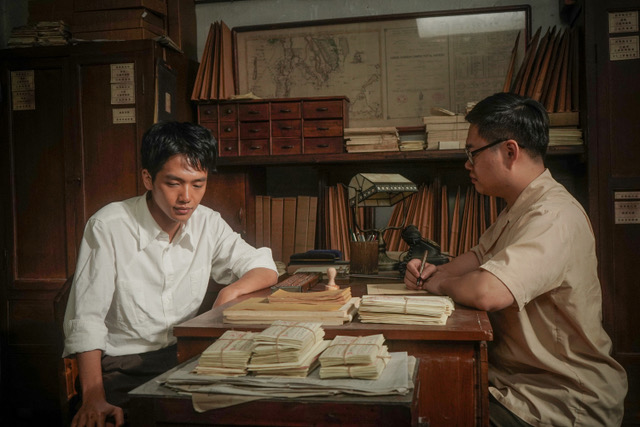 This is a film with a very low budget film that looks like it’s been shot entirely in pre-existing locations, without any built sets. There are also very few dramatic or elaborate scenes. The narrative tone is sympathetic but level, interspersed with down-to-earth humour, and free of pitying or maudlin sentiments, allowing the pain, the societal cruelties and haunting heartaches caused by chance and circumstances in the story itself, make their natural impact.
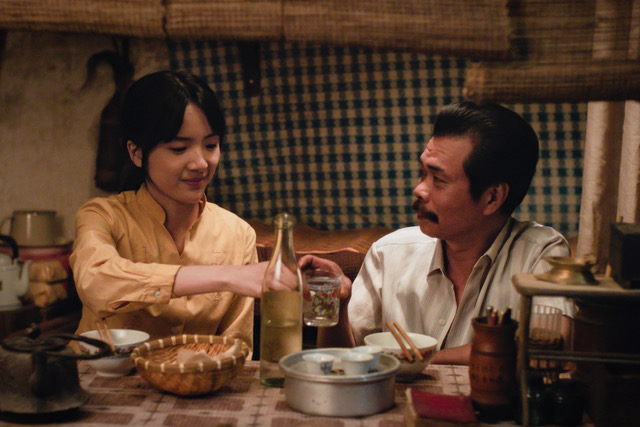
Integration does not seem like much of an option for these labourers, who are largely confined to a ghettoised existence, which is also limited by the educational censorship that looms in the background of the plot. The characters themselves are painted with flesh and blood, dialogues that show their very human desires and needs, as well as letting their core spirits shine through. We are moved by Musheng’s kindness to strangers, become invested in the platonic bond that forms between him and Xie Nanzhi (Li Sitong), whose strong wills clash initially but gradually come to appreciate and rely on the mutual help and support that would grow into a lifelong attachment.
It was moving to seeing the daily culture of Lingnan, Guangdong and Chaoshan that I had grown up with on screen, the tiny Gongfucha cups sitting on top of the raised circular porcelain trays, the carved dark wood chairs and tables inlaid with marble, the tongmoon outside open doorways in the summer, the drying of capok flowers, and the homemade olive pickles. From her short wavy perm, her thin and wiry frame, to the patterned shirts she wears and the way she bustles about the house, the elderly Ye Shurou reminded me thoroughly of my own adopted po po, who was from Shunde and had also raised four children on her own.

What also captured me about the story was how traditional culture is adapted away from its native environment, allowing its practitioners to make up their own rules. The Chen family who are keen to wed the headstrong Nanzhi, offer to have some of their offspring adopt her family name. Nanzhi herself cuts a bold feminist figure ahead of her time, rejecting marriage, she runs the family business pretty much single-handedly while caring for her alcoholic father, and in the end, decides to adopt abandoned children to raise as her own. The auntie (Zhong Shaoxian) who pursues Nanzhi’s father also proves a female force to be reckoned with.
To a certain extent, this is a story that all Chinese immigrants, wherever they come from, wherever they end up, could relate to. It felt close to my heart because of my paternal Teochew roots, and the Cantonese identity with which I feel the strongest affinity, among the hodgepodge of Chineseness that make up my heritage. My grandfather Ni Hongyi, had also lived in Thailand, but returned to China during the civil war. He worked as an undercover agent at a school, where he met my grandmother. The family’s branch of the Ni clan still has its ancestral village near the city of Chaozhou. It wasn’t until this seeing this film on the other side of the world, after many years as an immigrant myself, that my attention returned to this family and regional history.
Even in the end credits, as the true letters featured in the story are shown on screen, along with explanations of the civilian remittance agencies that ensured their delivery, the weight and impact of these overseas donations and support felt back home, highlighting the significance of the film’s tag line “a person must be compassionate and just”. It is a philosophy that Chaoshan people have historically adhered to.
 It made me consider my own life, how Ni Hongyi had been distant as a grandfather, but spent his later life heading the Guangdong Overseas Chinese Association, and a school for overseas Chinese students in Guangzhou. I myself am often considered an oddball, breaking from the conventional middle-class trappings set out by financier parents, who sought desperately to be western, becoming mad about Chinese cultures, literature, and the wonders of China. Perhaps it’s not so out of place after all. Hasn’t this been part of me all along? Part of the collective consciousness of region? The desire to write about my culture, to further transcultural understanding, and to help diaspora reconnect with their heritage. In my own way, I have been channelling the cross-generational family and regional spirit. I wonder what other conversations and histories this film will bring to light.
Dear You is now showing in cinemas in the UK and Ireland.
Due to the lack of formal postal or bank provisions, the qiaopi were transported and delivered via organically formed networks based on trust. Also known as yinxin, or money letters, they dated all the way back to the late 19th century and continued until the 1970s, when the transactions were incorporated into the business of banks. The popularity of Dear You has led to a revival public interest in these first-hand historical documents, and an exhibition was held at the Beijing International Bookfair, as part of UNESCO’s Memory of the World programme. But you can learn about the qiaopi at museums across Guangdong, as important documents of international Chinese migration history, records of the livelihoods and activities of overseas Chinese in North America, Asia and Oceana in the 19th and 20th centuries, and the historical developments within these countries.
Posted in Articles, Events