In to Mortal World: a New Evolution of the Cowherd and the Weaver Myth
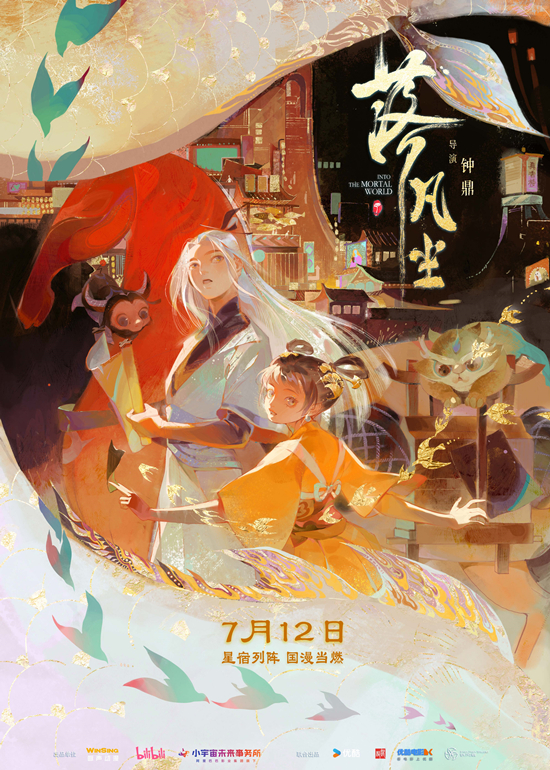 Today is Qixi Festival, which falls on the 7th of the seventh lunar month. Whereas Valentine’s Day is also now celebrated generally in China, and Lantern Festival is more for first romances, Qixi is the occasion to celebrate enduring love. And as the arts and commerce sectors increasingly turn their focus on it, more couples in China are choosing tie to knot on this day. The origins of this festival is associated with the story of Niulang and Zhinü, the mortal Cowherd and the Weaver goddess, China’s story of star-crossed lovers, and one of its four greatest legends. You can can read out this in my book Chinese Myths. If you’re interested in the supreme goddess who played a key role in the tale, read my guide to Chinese deities). For the traditions and customs, read my article. This year however, I wanted to write about the occasion with a new twist, by looking at a brilliant continuation of the myth by the donghua film Into the Mortal World (落凡尘, 2024), which I managed to catch on the plane on a recent trip to China.
Produced by WinSing Animation in Guangdong, and directed by Zhong Ding, Into the Mortal World is the story of the children of Niulang and Zhinü. Jinfeng was taken at a young age to the celestial realm by the star god Lingbi. Thinking that his parents and sister have all perished, he lives among gods as the ostracised demigod whose mother committed the ultimate forbidden sin. Jinfeng is given the chance to “atone for her sins” with the difficult task of recovering the constellations, which he is told, have gone astray in the mortal world. While there, he meets a girl named Xiao Fan, an adept of magic spells who is trying to sneak into heaven to find someone. The unwilling allies team up, eventually learn to trust each other and discover that they are far more connected than they thought.
I love that this film is a well-considered and thoroughly imagined sequel story to one of China best-loved myths. Elements in the children’s stories tie them back to those of their parents. Jinfeng’s weapon for instance, manifests in super strong luminous threads that can bind anything from magical creatures, to worlds. After they recover the Ox constellation, the Golden Ox seems to form a special attachment to the two, but later it’s revealed that the celestial creature had been on earth for a rather long time, long enough to have known one particularly cowherd. When Jinfeng and Xiao Fan finally discover her true identity, they reach out to each other across the skies, for millions who’ve grown up with the story of the magpie bridge across the galaxy, the visual impact is immense.
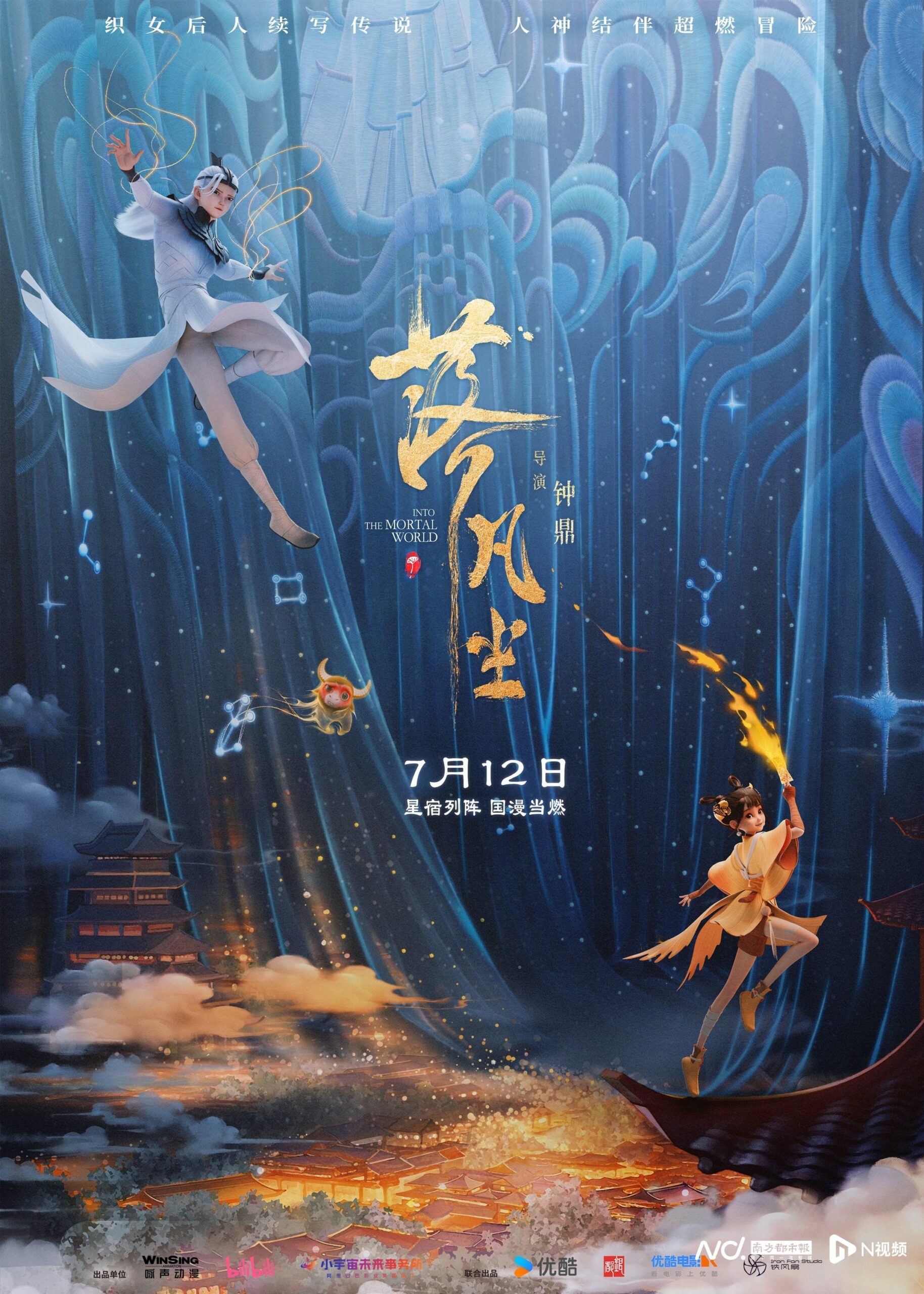 Alongside these subtle connections to the old myth, the film also appeals by its creativity and reinterpretation. In versions of the old myth, the seventh daughter of the Jade Emperor visited the mortal world out of curiosity, but the film meets contemporary fantasy sensibilities of more heroic gods with the retelling that the goddess had escaped to the mortal world to protect the stars. The constellations, as represented in Chinese astronomy, turn into cute and cuddly Pokemon-like creatures once they are tamed, with the White Tiger (one of the Cardinal Symbols), hardly containable in ferocious beast form, distracted at a crucial moment by dots of light cast on the tavern wall, which it starts chasing around, in true kitty fashion. When Xiao Fan introduces Jinfeng to the delights of the night market in the local town (where the architecture is peppered with cogs and pulleys, silk punk style), they enjoy a cup of “must-try” bubble tea together in the rooftop scene. The art and concept of the celestial realm make glorious display of what I call Techno-Daoist aesthetics, a unique new art style that Chinese fantasy is developing, which looks very cool for the resemblance between Daoist magic and high technology.
Making the story feel contemporary and relevant wouldn’t have been difficult, as Into the Mortal World began life as the graduation project of thirteen students at the Guangdong Fine Arts Academy. The traction their shorts gained online soon attracted film companies and platforms like Alibaba Pictures and Bilibili. Working with 2000 artists over five years, their dream eventually came true. In the original myth, after settling down with the cowherd on earth, the goddess disguises herself as a mortal and makes a living weaving cloth. This is why Qixi is also known as Qiqiao, the festival of “praying for crafts and skills”, in particular those related to textiles. As a child in Guangzhou, I wore many items handmade by various aunties who sewed for a living. With its vibrant history of textiles industries and clothing trade, the myth of Niulang and Zhinü holds particular significance for regions such as Guangdong. Lingnan’s distinct schools of painting also lend themselves to the film, where the flashback on the young protagonists’ parents is animated in a lovely traditional style art.
Released first in Cantonese, Into the Mortal World is a celebration of regional innovation, industry and cultures, and a delight for those who like mythology, donghua and xianxia stories alike.
Posted in Articles, Events and tagged animation, Cantonese, china, Chinese, Cowherd and Weaver, donghua, film, Guangdong, Guangzhou, myth