Love Game in Eastern Fantasy and Chinese Supernatural Storytelling
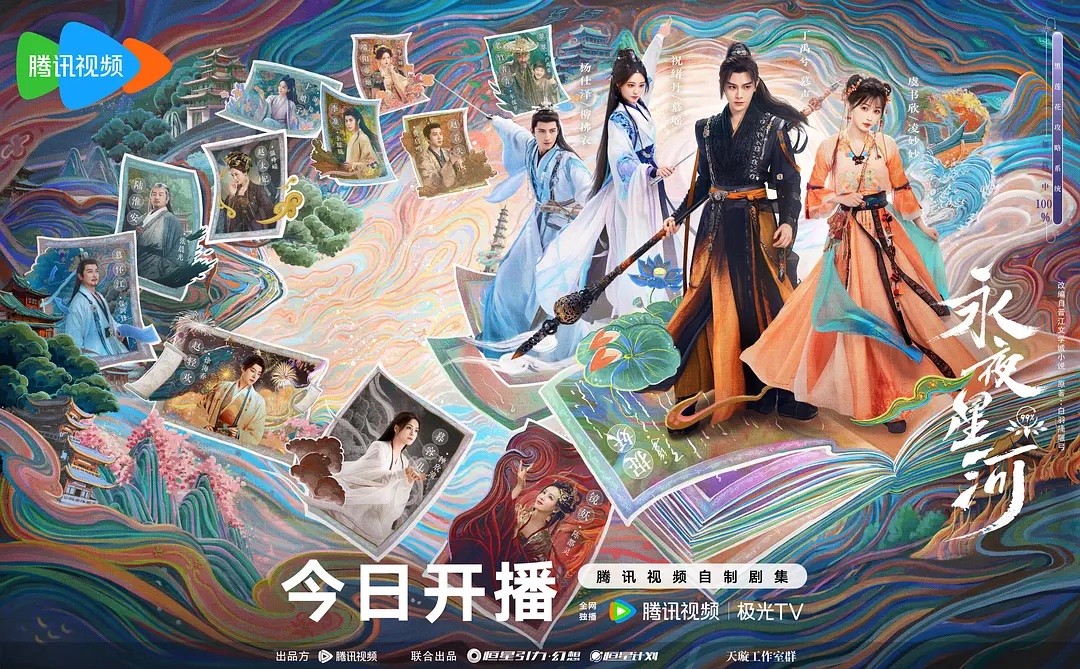 One thing I’ve really tried to do over the last year is give myself more time to enjoy China’s TV output, but there is such an immense volume of Cdrama out there, both classics I’d like to rewatch, and new series coming out all the time, I’m still having to be selective with the ones I commit to. One that’s caught my interest, and perfectly demonstrates one aspect of Chinese culture, is Tencent’s current hit series Love Game in Eastern Fantasy 永夜星河, which provides an excellent inroad to discussions of supernatural fiction in China.
Adapted from the web novel Black Lotus Tactics Manual by Baiyu Zhaidiao 白羽摘雕, the series is a chuanshu story (a subgenre of chuanyue or portal fantasy) of Ling Miaomiao, an office worker and fantasy nerd in contemporary China, who finds herself transported into the gamified dynastic universe of a new xianxia, by her favourite writer. Inhabiting the role of one of the support characters, she must complete the assignments set by the system, based on the plot of the novel, in order to return to her world. As Miaomiao embarks on quests with the yao-slaying protagonists, their thrilling adventures elucidate some key concepts in supernatural storytelling.
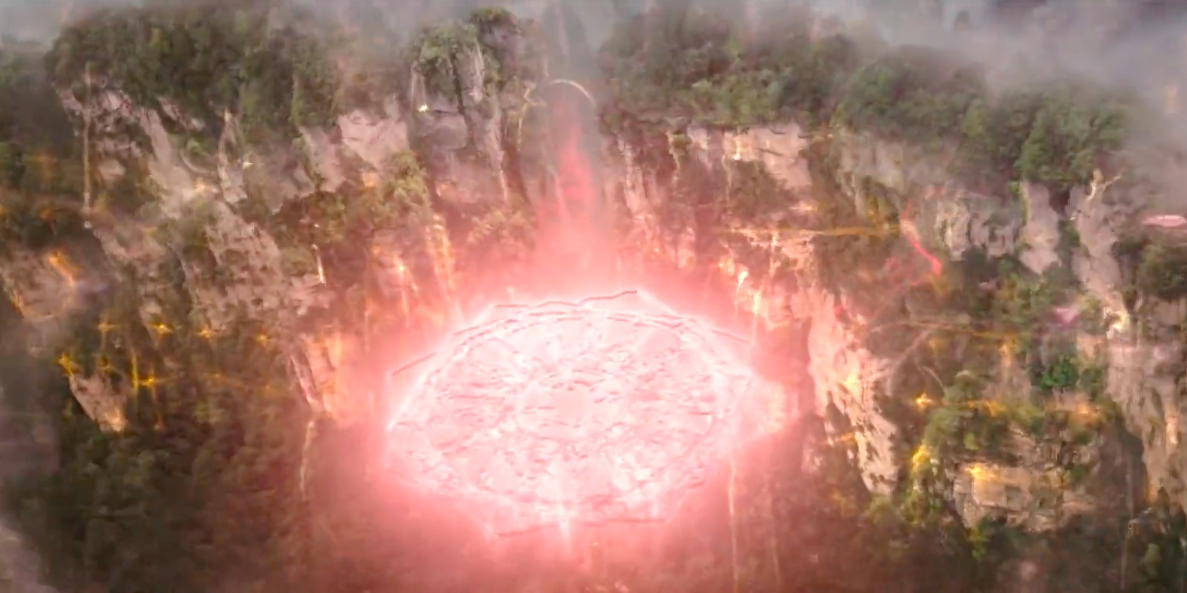 One of these is the Chinese attitude towards mountains. When Miaomiao and her companions arrive at the village by Mount Qilin, they find many of its inhabitants missing, and the rest suffering from amnesia. They are severely warned against going into the mountains. In the Chinese imagination, mountains are associated with fear, the unknown, and have become the site the strange and the monstrous. When Miaomiao, Mu Sheng and Cuicui do end up in the Qilin range, they indeed discover nightmarish occurrences, and a powerful water yao who has been trapping people with illusions, drowning them, and absorbing their essence. China’s greatly vast size, greatly varying landscape mean that the more inaccessible mountains remain unexplored, and the unknown is always one of the best places for fear to grow. One of the most spectacular, and creepy mountain ranges in China are the soaring gothic mountains of Hunan’s Zhangjiajie. Jutting up like giant skeletal fingers, and riddled with caves, the region was the origin of jiangshi lore (zombie-like indigenous undead) in the late dynastic times, and remains deeply associated with monstrous lairs, finding itself the filming location for various monster encounters in modern storytelling, including the 1986 CCTV adaptation of the epic Journey to the West. Sure enough, this particular threat in Love Game is filmed in these very mountains, with magnificent shots of their misty tops augmented with superimposed glowing Daoist spells.
The central plot of story is cultivator Mu Yao’s quest to revive her father’s legacy as the leader of the prestigious clan of Yao hunters, by restoring the family heirloom, the 百妖图 Hundred Yao Chart. Early Chinese literature is filled with such charts and textual guides, the most famous of which are the 白泽图 Baize Chart, said to have been revealed to the legendary emperor Huangdi by a wise mythical creature that resembled a large white cat; and of course, the Warring States-Han era 山海经 Classic of Mountains and Seas, the earliest cosmography of its scale. The beginning of supernatural writing is rooted in the idea of being informed about strange lands and the creatures within, as a form of protection. These compendiums, which evolved into the Zhiguai (records of the strange), and became the Chuanqi (strange tales) that we love so well, have undergone a contemporary revival.
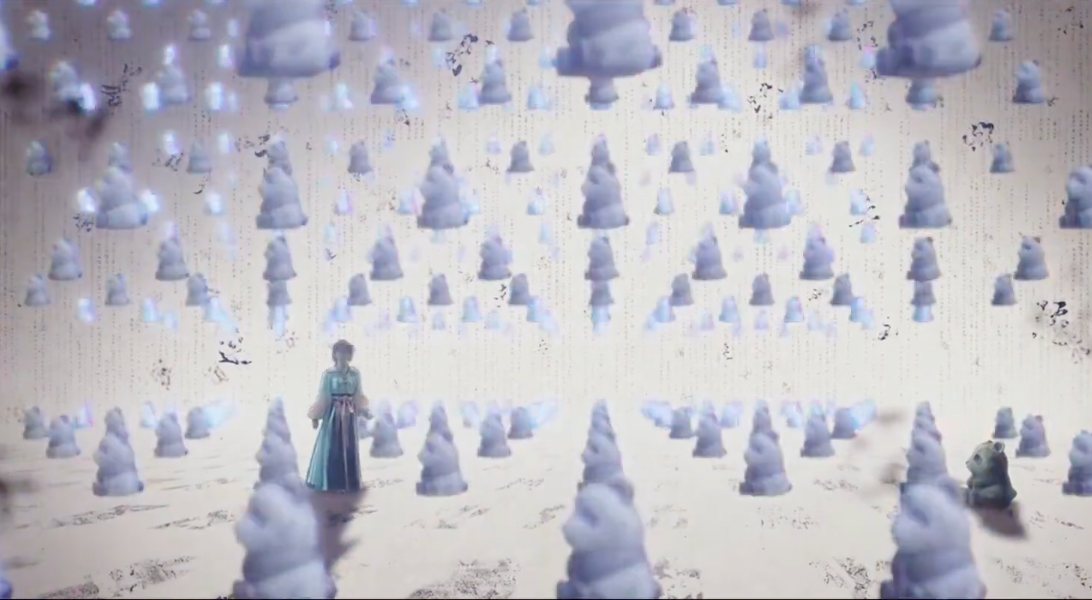 An overwhelming sense of predestination, of the world and the beings within bound by their destiny and allotted their place as components of a vast system of the Dao, pervades the story. This sits in resonance with xianxia games from the 1990s and 2000s, such as Chinese Paladin and Three Kingdoms Fantasia, which set the tone subsequent xianxia worldbuilding. In other contemporary adaptations, this worldview is usually explored through the characters’ attempts to transcend hierarchical societies, realise forbidden romances, or break free of predestined paths. Xitong (the System that runs the gamified universe of Love Game) takes on a Dao-like quality. “Xitong has no specific shape or form, but it is everywhere.” As the story progresses, Miaomiao is forced to act out the role of a scheming villain that she personally finds objectionable, but every attempt she makes to act better, fix the situation or otherwise go against type, results in Xitong resetting her actions, and throwing her back to a ‘Save Point’. This Groundhog Day-style set up gives us the drama, as the heroine battles between her attempts to challenge the system, and her desire to return home, often coming up with creative solutions, allowing her to complete her assignments, without necessarily having the harmful impact intended.
Directed by Zhao Yilong (Nirvana in Fire), starring Esther Yu, Ding Yuxi, Zhu Xudan and Yang Shize, the series follows in the footsteps of recent xianxia adaptations such as Love and Redemption and Tiger x Crane, presenting smooth and skilled martial arts choreography and camerawork, magnificent on-screen representations of Daoist magic and glorious renditions of the yao in gorgeous artistic make-up, inventive costumes and breathtaking movement. Remembering Chinese CG in the ‘90s, I love seeing how far Chinese productions have come, achieving this level of visual storytelling. Like many adaptations of contemporary novels by women, the show’s rounded and dynamic female character representations are a welcome departure from the gendered stereotypes in some earlier xianxia works.Love Game in Eastern Fantasy is available to watch on WeTV, Vicki and Netflix.
Posted in Articles