The Ever Evolving Legacy of China’s Pirate Queen
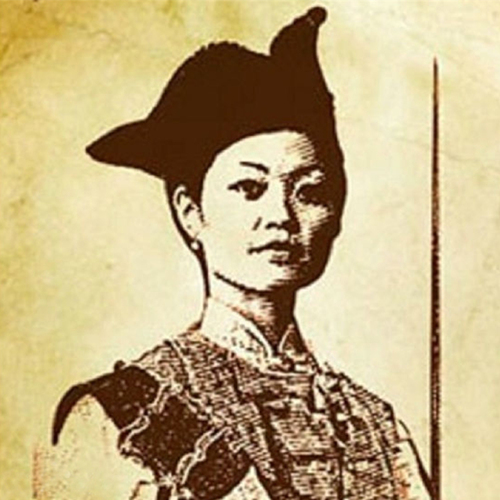 As fans of the British sci-fi series “Doctor Who” collapsed into their sofas at the conclusion of the show’s most recent episode, “Eve of the Daleks,” those of us who are also fans of Chinese history were staring slack-jawed at the trailer for the Doctor’s next adventure. Not because it promises the return of a classic monster or because it will be Jodie Whitaker’s penultimate outing as the Doctor, but because of what the Doctor exclaims as the camera cuts to a full-frame shot of Hong Kong-born actress Crystal Yu.
“Madam Ching?”
The legendary pirate queen best known in English as “Madam Ching” has a long list of aliases and titles. Two of the best known, Ching Shih and Ching-Yi Sao, are mixtures of corrupted Cantonese and Wade-Giles romanization; both identify her by her marriage to Tzeng Yut, the pirate leader from whom she inherited her power and position. Other aliases, such as Auntie Dragon and the Fragrant Lady, reference her fierce reputation and past as a brothel worker, respectively.
Hardly anyone refers to her by her birth name, Sek Yeung. The story of how Sek Yeung became Ching-Yi Sao — or if you prefer pinyin, Zheng Yi Sao — reflects the low status of women in traditional patriarchal society. That she is remembered at all, under any name, is a testament to Sek’s amazing self-transformation from marginalized woman to pirate queen, as well as the fame — some might say infamy — she won in the process. For the purposes of this article, I will honor the legacy of the woman behind the legend by calling her Sek Yeung, except where context requires I use one of her other titles.
According to accounts from the period, Sek Yeung was born in 1775 in South China. Her early years read as though they were ripped straight from a noir novel: In 1801, while working in a small floating brothel in the coastal city of Guangzhou, the 26-year-old Sek was captured by pirates. Later, one of her captors, Tzeng Yut, took Sek for his bride.
According to custom, Sek from then on was known as “Tzeng Yut’s Wife.” Soon, she began helping her husband form alliances with other pirates, and turning their own organization, the Hongqibang, or “Red Flag Gang,” into one of the region’s most powerful navies. After Tzeng drowned during a typhoon off the Vietnamese coast in 1807, Sek took over his position, first as the head of the Red Flags, then as leader of a vast pirate alliance.
Read the rest of the article on Sixth Tone.
Posted in Articles