The Legend of Mando Part 1: a Tale of Quests in New Republic Jianghu
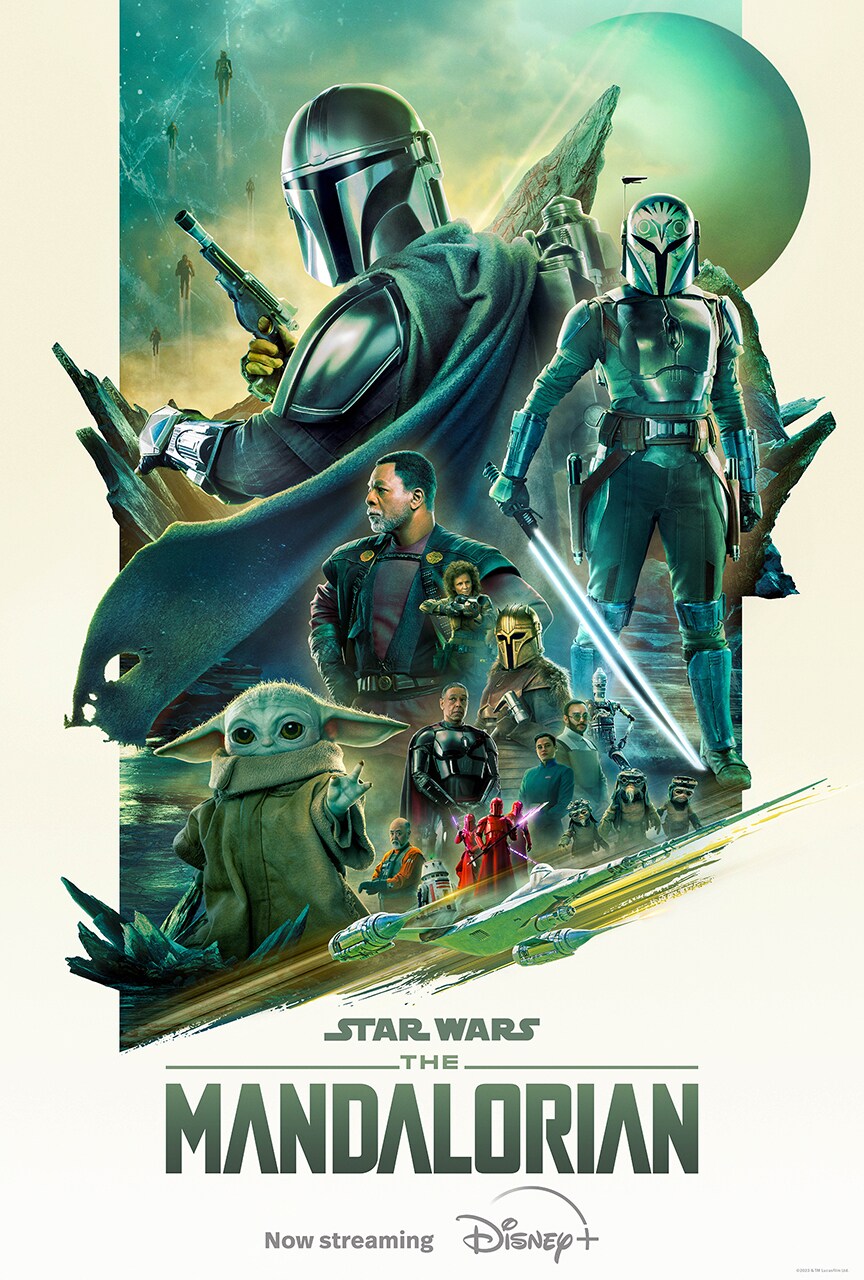 Whenever I wax lyrical about the wonders of Chinese wuxia, of clans, intrigue and swordsmen, I’m often told that people in the West will have a hard time understanding it, and yet, when I sit with my geeky friends, they are more than happy to info dump about old Republics, the Jedi Order, bounty hunters and the shadow organisations of Star Wars. Western nerds, you have been enjoying Wuxia stories, for nearly 50 years.
The main reason I hadn’t originally made the connection, was that I was relatively late to the franchise. I didn’t grow up in a culture where Star Wars was this huge thing, and it wasn’t really till the sequel trilogy came out that I sat down and actually watched the thing, and with 2016’s Rogue One, starring Donnie Yenn and Jiang Wen, I began to see the parallels with the martial arts fantasies I grew up with.
I had originally planned to write this as a two-part piece, the first for May the 4th, and the second for the release of The Mandalorian and Grogu. But the more I delved into the expanded universe, animations and series, the more I found I had to say. In fact, I’d like to begin away from the swords and sorcery of the Jedi’s story, and look at just how Wuxia-coded The Mandalorian’s story is. For a start, it’s three (and a half) season saga, and the imminent film release give it that feeling of modern Wuxia series, which often run to 30+ episodes, giving plenty of room for character growth amongst the battles and betrayals.
Let’s look at the setting of The Mandalorian. Set in the early years of a burgeoning new ruler (the New Republic), when we see warlords, such as Moff Gideon and Morgan Eslpeth controlling regions with their authoritarian rule and private armies, crime syndicates run amok and bounty hunters are recruited for anything from body guards to prison breaks, smuggling, assassinations, all while the remnants of the old Emperor’s forces are rising from the shadows. In other words, a transitional time of instability, lawlessness and chaos. You couldn’t find a more typical setting for a Wuxia story. Classic Wuxia cinema’s favourite version is the era of the Dongchang and Sichang, of the Ming Dynasty, when eunuch usurpers controlling the imperial secret police and intelligence threw the country into chaos with their power feuds. These are times when the Xia thrived, and their legends were born out of stories of real wandering contractors, during a real historical time of chaos, the Warring States period.
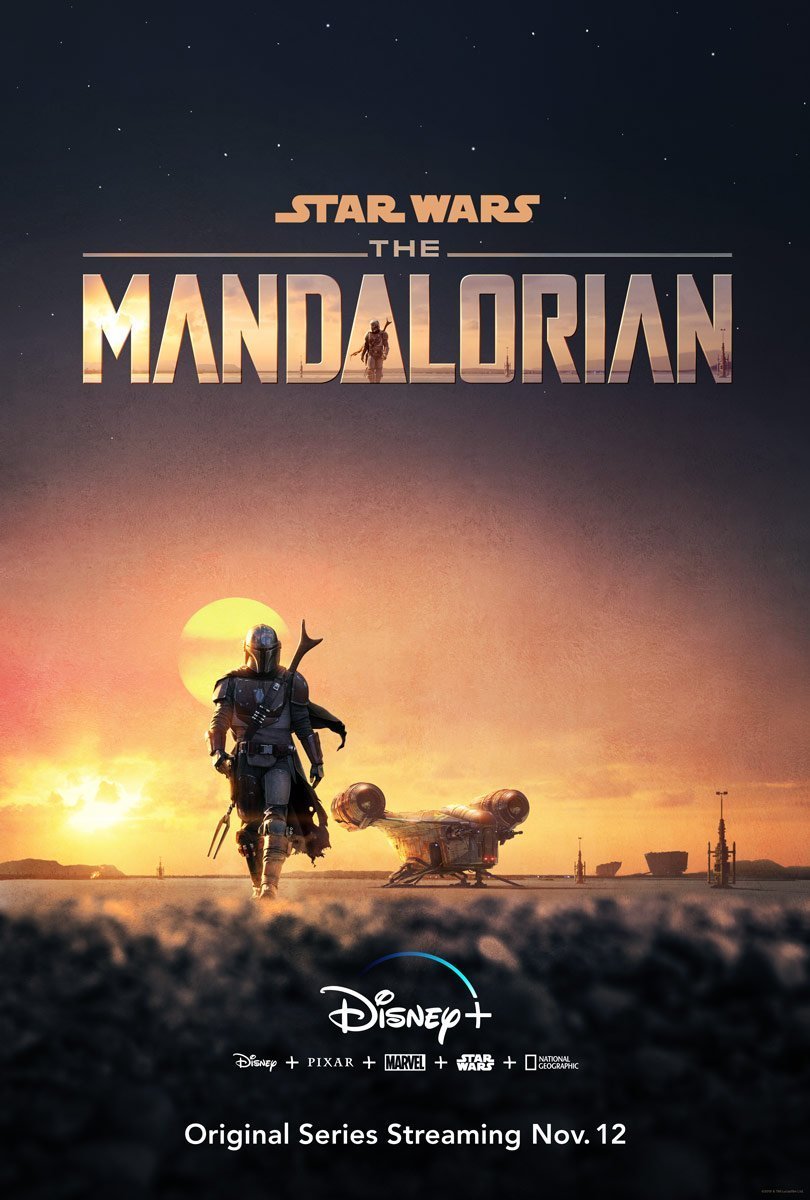 Consider the settings in which Din Djarin operates, from the black sands of Nevarro and harsh deserts on the Outer Rim planet of Tatooine, to the ravaged forests of Corvus, and icy caves of Maldo Kreis. These are akin to mountains, bamboo forests and abandoned temples, the backdrops against which some of the most intense moments of Wuxia cinematography have occurred. The other locations visited by Din Djarin, prisons, abandoned mines and ruined temples, are all places on the edge of society where the Xia exist, frequent and fight, often as a thin line between the violent life of Jianghu, and the everyday citizen beyond. Even the towns and villages where the Xia do interact with the general populous, are on the margins of ruling states, less bound by social norms, and pregnant with infinite possibilities for tall tales, like the outpost towns where Mando receives his missions. It is made explicit that the clans do not have a place in these spaces, but still, from their own sense of honour, feel duty-bound to stop their fights from breaking into that world. This is seen in the Mandalorian’s return to protect Nevarro, but also, in Wuxia, such as Legend of Fei, in which many of the attacks, face-offs and rescues between clans, Xia and the medleys of Jianghu take place on the territorial borders between the Northern and Southern Dynastic powers.
Of course, the clan rules are yet another tie to Wuxia. The Mandalorian’s vows, dedication to martial arts, secretive techniques of combat and smithing, are all pretty standard for the clan-attached Xia. The secrecy of the masks, and the decisions to live apart from the rest of the world are also common. ‘The Way’ (which is translated as Dao in the Chinese dub), has all the complexities of inter-clan politics, with different branches interpreting adherence to different skills and practices. The matriarchal nature of the clan is very prominent in contemporary Wuxia. The strong character of its leader The Armourer, martially proficient, honoured for her holding of the Clan’s secrets, again reminds me of clan leaders such as Li Jinrong of 48 Stronghold, and the Cai Clan of Luoying Valley.
The Mandalorian employs one of the most common types of Xia narratives, the quest story. Whether it’s treasure hunting, the search for a missing person, or a cure, the Xia not only have to have skills, but must travel. This allows interesting characters to be introduced, hazards to be met, and for their characters to develop. The back of a lone armoured figure, walking into a desolate, snow-swept landscape, is very Xia-coded, as is the solitary, battle-worn warrior trekking across the desert.
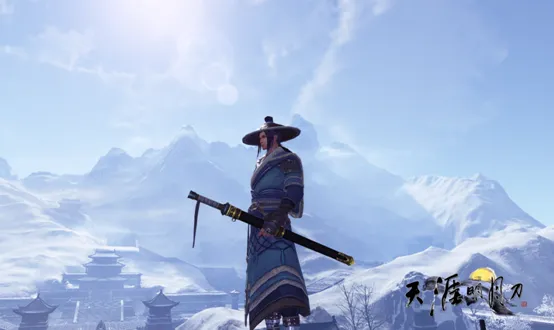 While I’m aware that at the heart of the Star Wars mythos, are elements lifted generally from Joseph Campbell’s studies of heroic storytelling, and more specifically Asian-style storytelling, as expressed in Akira Kurosawa’s films, the back and forth between these and Chinese drama and filmmaking makes me think the creators are at least familiar with the genre, especially the Shaw Brothers Wuxia films. The show’s characteristic long shots of our protagonist, seem lifted from such works as The Laughing Swordsman, who’s protagonist, Linghu Chong, shares another key trait with Mando. By standing up for freedom, or for the life of an endangered child, they surrender themselves to unknown paths, which eventually crystalise into clear and noble quests, guided by their Xia spirits. Starting off with a bounty hunt, Mando’s story quickly turns into a quest to protect the Child, finding members of Grogu’s clan, and ultimately, to make a personal journey of atonement to reunite with his own.
If you expected this article to be littered with the fight scenes, I wanted to make a distinct focus on the Xia mentality, which denotes the genre beyond the wider scope of martial arts fiction. A story can’t be called Wuxia without the characters going out of their way to act for the greater good. By these criteria, The Mandalorian is a wuxia tale through and through. The moment he violates the Guild’s rules, breaks into the imperial safe house to rescue the ‘bounty’ he just delivered and runs away with it, Mando-Xia comes into his own. A story of valour needs to be set in an unkind world, contemporary Wuxia fiction often take places in gritty environments of scant freedom where people are guarded, either too scared or too selfish to speak up. This one is a grim world in which every deed is bargained, every favour traded for, and our hero a hard-nosed bounty hunter. But he is also a warrior who follows the codes of his clan and honours his word. This is the way of Jianghu. He agrees fend off Klatoonian raiders for the villagers of Sorgan, helps Marshall Vanth slay the krayt dragon in Mos Pelgo and fights alongside Ahsoka to defeat Morgan Elspeth and safeguard the village on Corvu. If trading these acts for intel leaves his heroism in any doubt, his decision to help his friends overload the imperial reactor near Nevarro, and to infiltrate Moff Gideon’s ship to rescue Grogu dispels any doubt.
Like any other Jianghu, the makers of Star Wars do their best to create a community out of a range of the shady and strange, from mad scientist Dr Pershing, mysterious bounty clients, dangerous mercenaries Xi’an and Qin (with dubiously Chinese-sounding names), petty criminals, pirates and splinter sects. The Dark Troopers emerge from the shadows just as the silent, mindless and deadly black-clad cike in douli hats, only to be defeated by newfound allies. The conventional sense of marvellous adventure is also present throughout, with characters fighting rare beasts like the mudhorn on remote planets and giant spiders on subterranean caves. The Mandalorian is an old jianghu hand, acquainted with the unspoken codes of knowing who you’re dealing with, and, though they might not equate with civil law, working within the rules of the clan. For instance, acquiring the requested items for the Jawa in exchange for stolen parts of the Razor Crest, or making a deal with the inscrutable and somewhat volatile Tuskan Raiders, in order to defeat the krayt dragon, respecting their ways despite their social invisibility, making them rather good equivalents to the Beggar or Peddlar Clans of Jianghu.
Reserving Star Wars’ cultivation clans, both righteous and demonic, in the form of the Jedi and Sith, for a write-up on Maul, I’ll be discussing the key Wuxia themes in The Mandalorian in the second of this two-parter.
Posted in Articles and tagged jianghu, SFF, Star Wars, The Mandalorian, Wuxia