The Mythos of Kunlun
 Earlier this year, I was asked to participate in Erland Cooper’s Mythic Mountains series, part of The Essay on BBC3, for which I had the pleasure of discussing the myth and cultures of Kunlun with the host. We only had a short time, so I’ve written this article based on further insights from my research, to supplement the conversation.
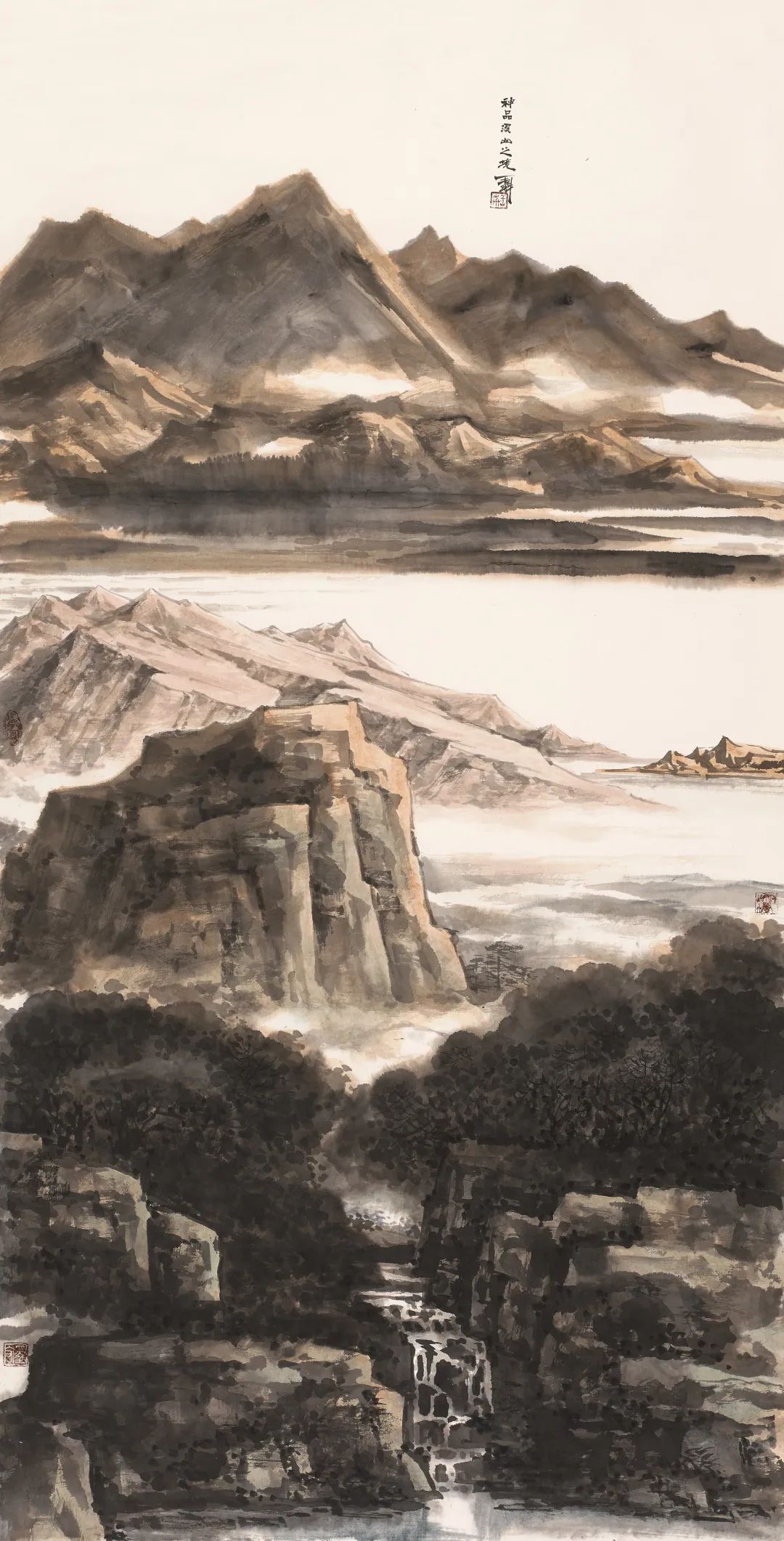
In China, there are two Kunlun Mountains. A physical mountain range in the west, and a mythical one, whose influence has been felt for the past thousands of years. The real Kunlun Mountains range from the east, through the very heart of China, westwards all the way to its borders, disappearing into Tajikistan. It feeds two of the five major rivers of China, the Yellow River, and the Yangzi. As the longest mountain range in China, it’s sometimes called 万山之祖 “Forefather of Mountains”. Acting as a border, barrier, water source and shelter for so many regions within China, it’s not surprising that Kunlun has become the focus for so many myths.
In Chinese creation myths, the world began as an amorphous mass of chaos. The sky deity created the sun, moon and stars, and the earth deity created the grain and grass, the chaos slowly separated into heaven and earth. Then the Renzu (ancestor of humankind) appeared as two human-headed and serpentine beings, Fuxi and Nüwa, who climbed a mountain and birthed hundreds of children. In some version, they were the sole survivors of the great flood after scaling this mountain. This mountain was Kunlun, and so it was portrayed as the birthplace of humankind. It was believed that although people of the world looked different, they were all from the same family that was born on Kunlun.
In one of the most popular creation myths, Nüwa is the only being at the beginning of the world. She wanted company, so she created companions out of mud. At first, she sculpted them from earth and then, to make it quicker, dipped branches in river mud so that each of the droplets came to life. So the very soil of Kunlun is presented as the origins of humankind. Legend says that after Huangdi, the Yellow Emperor won the great battle against his brother Yandi, he presided over the land from his palaces in Kunlun. As Huangdi is considered the bringer of order to the world, Kunlun is thus the place where civilization is forged.
After heaven and earth separated, there have been a few sky ladders but none so remarkable as mythical Kunlun, which is described by multiples texts as located at the centre of the world, and also believed to be where the sun and moon rose and fell. The foundations of Kunlun’s mythos come from several early sources, the Shanhaijing (Guideways through Mountains and Seas), Huainan Zi (the Book of Huainan) and Chu poetry, the most famous representative of which is Qu Yuan (4th to 3rd BCE). Kunlun is seen as an earthly home of the gods and a sought-after paradise, where rare plants and creatures that cure and enhance can be found, such as the Muhe (Tree Grain), Pearl Tree and Shirou (Seeing Flesh). It’s famously difficult to climb, reaching each of its multiple tiers (Liangfeng or “Cool Wind”, Xuanpu, the Hovering Gardens, and Tianting, the nine-level Court of Heaven) grants you supernatural powers. Only the legendary archer Yi and King Mu of Zhou are supposed to have reached the summit.
 The way is also perilous, and all manner of dangerous creatures and spirits exist to prevent your passing, like Toulou, the man-eating goat, and Qinyuan, bee-shaped birds with lethal poison in their beaks. Once you get past these, you’ll meet the deadly guardians, Kaiming the divine beast with a tiger’s body and nine human heads, the Luwu, the god with a human face, tiger’s body and nine tails. There’s also the hazardous terrain. The Guideways talks about the Liusha quicksand, the Ruo River where nothing floats, the flame mountain where a ferocious feline deity dwells and Yayu the resurrected zombie god lurking in the pools beneath.
Not only is Kunlun a major point on the Chinese mythical map, it has become entwined with the development of indigenous philosophies, cultures and civilisations. Mythical Kunlun later became a Daoist paradise where monks and cultivators, who ascend after their earthly existence, fly around riding cranes. The lofty desire of intellectuals to seek alternative existential paths other than wealth and high office, as articulated by Qu and other Chu poets, depict Kunlun as a place of spiritual sanctuary. In its mythical landscape, the emerald lake and birds, the jade wells and bulastrades, we can trace early tribal jade worship. In its supernatural inhabitants can be found the early roots of the concepts of Xian, in both its real and mythical geography can be seen the evolution of Xiwangmu, after whom the tallest point, the Goddess Peak (Liushi Mountain), is named. When she began life as a ferocious cat lady, she dwelt in the caves of flame mountain. The villages at the foot of the real Liushi still grow the sought-after pantao peaches and hold festivals in imitation of the famous celestial banquets, hosted by Xiwangmu in her later form as the supreme goddess.
The myth of Kunlun has been a powerful draw to creators through the generations, and the fabled mountain still appears in fantasy films, comics and TV shows. As the legendary sought-after paradise containing rare objects and last-resort cures, Kunlun’s frequently the destination of in narrative quests of all sorts in literature. Multiple versions of legend of White Snake, sees Lady White brave the journey to Kunlun to find a cure for Xu Xian. The ambiguity in Kunlun as the wondrous paradise, but also an illusive one, a gateway, a place surrounded by danger where things are not what they seem, is continued in contemporary storytelling, from Marvel’s Ironfist, to films such as Nezha 2 and Cdrama series like Fangs of Fortune. The real mountains attract thousands of tourists every year, where you can go and pose for photos dressed as demons and heavenly celestials.
To find out more about the mythical wonders of Kunlun, check out the episode and the rest of this fantastic series on BBC Sounds.
Posted in Articles, Events and tagged china, Chinese, culture, Kunlun, mountains, myth, mythology