Wandering Earth 2 and the New Global Order
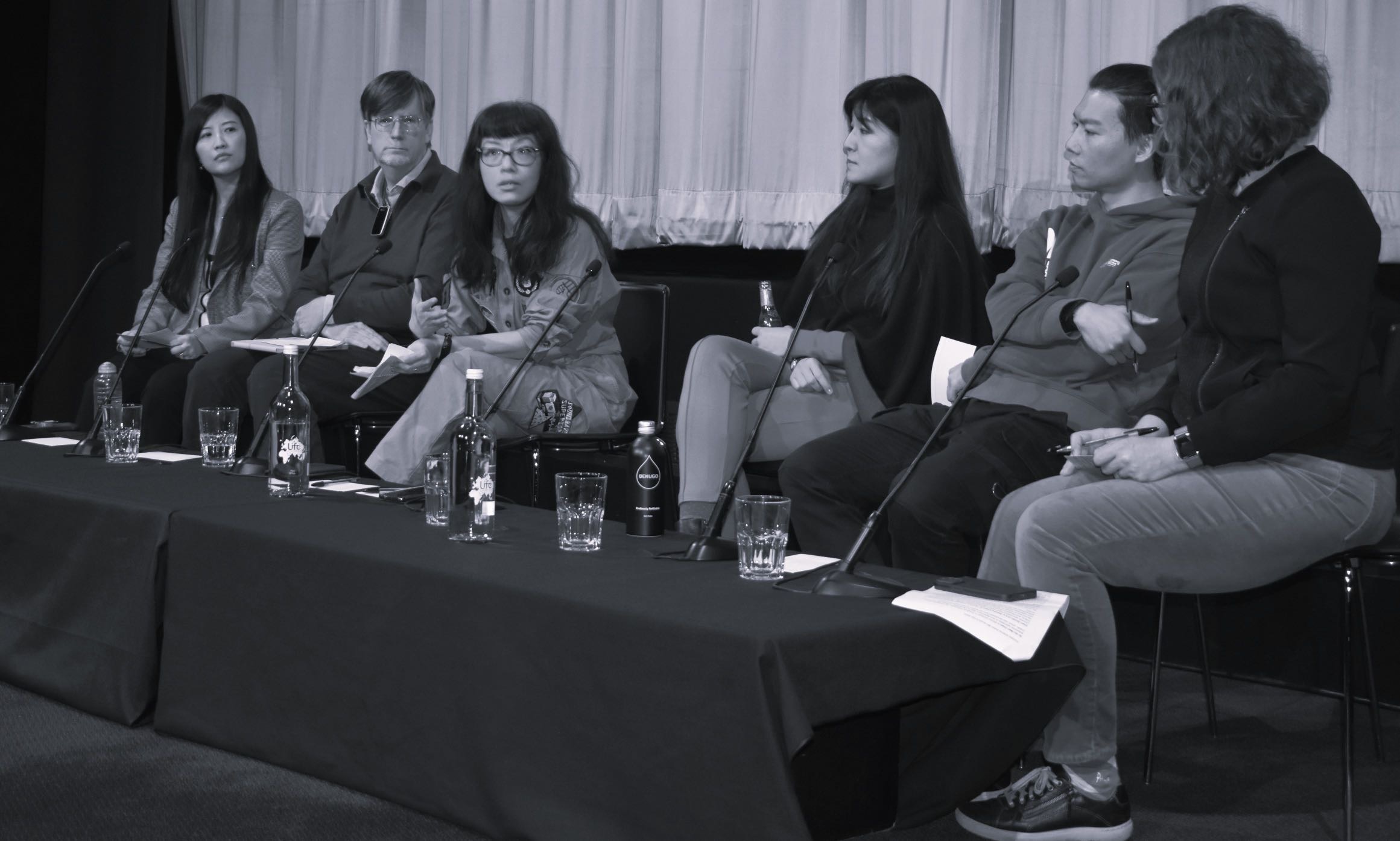
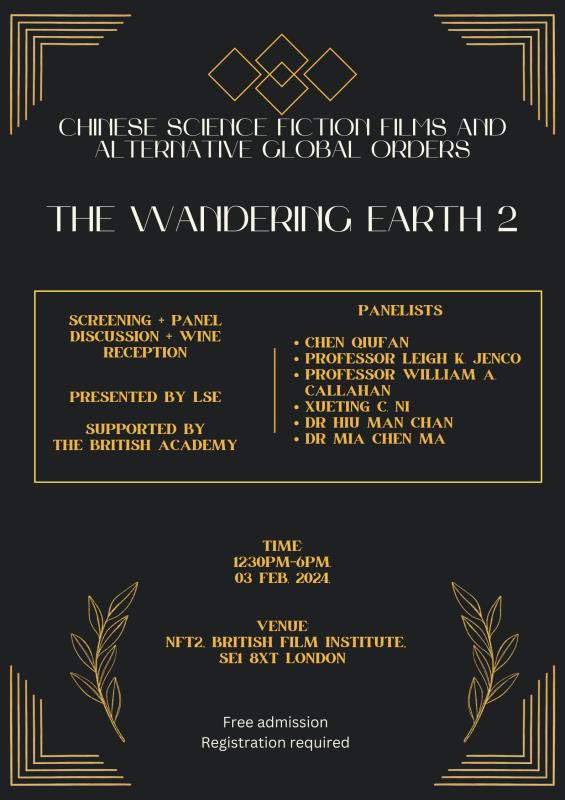 It was a pleasure being on a panel hosted by L.S.E. with fellow authors and scholars to discuss recent Chinese sci-fi blockbuster, The Wandering Earth II (Frant Gwo) Cinema plays a major role in furthering cultural understanding, and there is definitely more to both Chinese science fiction and this movie than some have considered them, as mere “tools for soft power”. We each spoke a little on the work before entering the discussion, here is the short talk I presented.
Like Wandering Earth 1, this second film also depicts a geopolitical landscape that places China at the top of global political power. This is shown through the made-in-China technology that operates the Wandering Earth Project, the diplomatic influence the country exerts over international disagreements, and the decision making that affects the fate of the entire planet.
I saw this film for the first time at the cinema in London, when it came out last year. Whilst I had also watched and written about the first film around its release, this was the one that made me to want to read Liu Cixin’s short story and see how its original creator envisioned an epic tale that involves a fundamental alteration to humanity’s existence.
The world presented in the original short story is one of international co-operation. It quietly happens because it is taken as a given. In this global order, China holds as much of a stake as others in the running of this earth-moving operation, which I find far more interesting, because the story deals with how the extreme employment of technology can change the course of nature, what the impact of this has on Earth itself, and also, on society in terms of cultural outlooks and the whole concept of social and familial relationships.
The author has the population divided between the Takers and Leavers, those who want to take Earth with them, and those who want to leave it behind and fly off in spaceships. He shows the large-scale scientific and philosophical debates through the voices of individual characters, exploring the disintegration of familial and romantic bonds in the face of pretty much incessant, on-off life-threatening dangers which would last for generations. As resources are diverted away from the so-called ‘soft subjects’ such as Philosophy and the Arts, Liu examines the dehumanising consequences of this approach, on the very people this endeavour is trying to save. Whilst it is written from the perspective of a Chinese protagonist, the world depicted has moved beyond the pettiness of race and national differences, being instead, inundated with greater preoccupations of extinction and survival, and fundamental changes to the universal ways in which humans view their world.
 When the story was first written, climate change deniers seemed to be the biggest problem we had to face. The cycles of fake news, corporate manipulation, and ever-increasing layers of partisanship at every level that we are dealing with now, were only beginning to rear their heads. By the time we had a cinema outing for this story, contemporary society and politics had moved on, as had China’s increasing desire to revel in the domestically-produced SF blockbuster.
The first film, which was set during one part of the journey, where all the hard decisions had already been made, was able to focus on the unforeseen disasters in a linear fashion and follow the Hollywood action film formulas. The second one however, is a far more complex piece. In addition to the set action pieces, it maintains a good handful of tense scenarios throughout. It also interweaves in romance and family drama, in a way that Chinese cinema and storytelling does particularly well.
It does, of course, present a China-centric global worldview. It’s happy to appeal to the domestic market first, it is not trying to be an American movie. Moreover, the idea of a disaster, or action film being nationalistic seems only be problematic when the flag being waved is not red, white, and blue. We only need to look at the U.S.-centric vantage points adopted by films such as Independence Day, Armageddon and Deep Impact.
As China gets more involved in commerce, arts and infrastructures across national borders, it WILL need to define its place on the global stage. When other might see it justifying a place at the table as a threat, I think that at best, the traditional philosophies of humility, moderation and social harmony would provide alternative diplomatic perspectives that have something new to offer. And at worst, it creates a dilution of power amongst those few, who try to drag the herd along.
The threats which appear in Wandering Earth 2 are not all delineated by nationality or religion. We’re offered the opportunity to accept the fate, to give up physical form and exist in an eternal zoom meeting. The villains are not old national enemies, but new entities of our own creation. Nor is the film’s China-centricism purely political. Because not every nation would want to literally take their homes with them if their surroundings are no longer tenable. The Chinese sense of home though, is so strongly associated with the rivers and mountains, with the land itself, and in the original story changes to the land itself make a significant part of narrative. It is interesting that this part of the national character is glossed over by the filmmakers, for a product much more concerned with the current, the immediate and what a young Chinese audiences would enjoy.
There is a lot to digest. Quite honestly, Wandering Earth 2 is an incredibly dense piece, and could well have supported a whole mini-series. It roams across a range of current societal preoccupations, from the anxiety regarding terrorism and national security, which is very much an internal consideration for China; to debates on the function and programming of artificial intelligence, which is increasingly becoming everyone’s concern.
Posted in Events and tagged blockbuster, china, Chinese, cinema, culture, film, Liu Cixin, movie, panel, science fiction, Scifi, society, The Wandering Earth 2